A few days ago, I had to resolve a routine issue through the support chat of a major retail bank. As someone who designs and deploys conversational AI bots for business clients, I was curious to see how a multi-billion dollar financial institution handles live customer support in 2026.
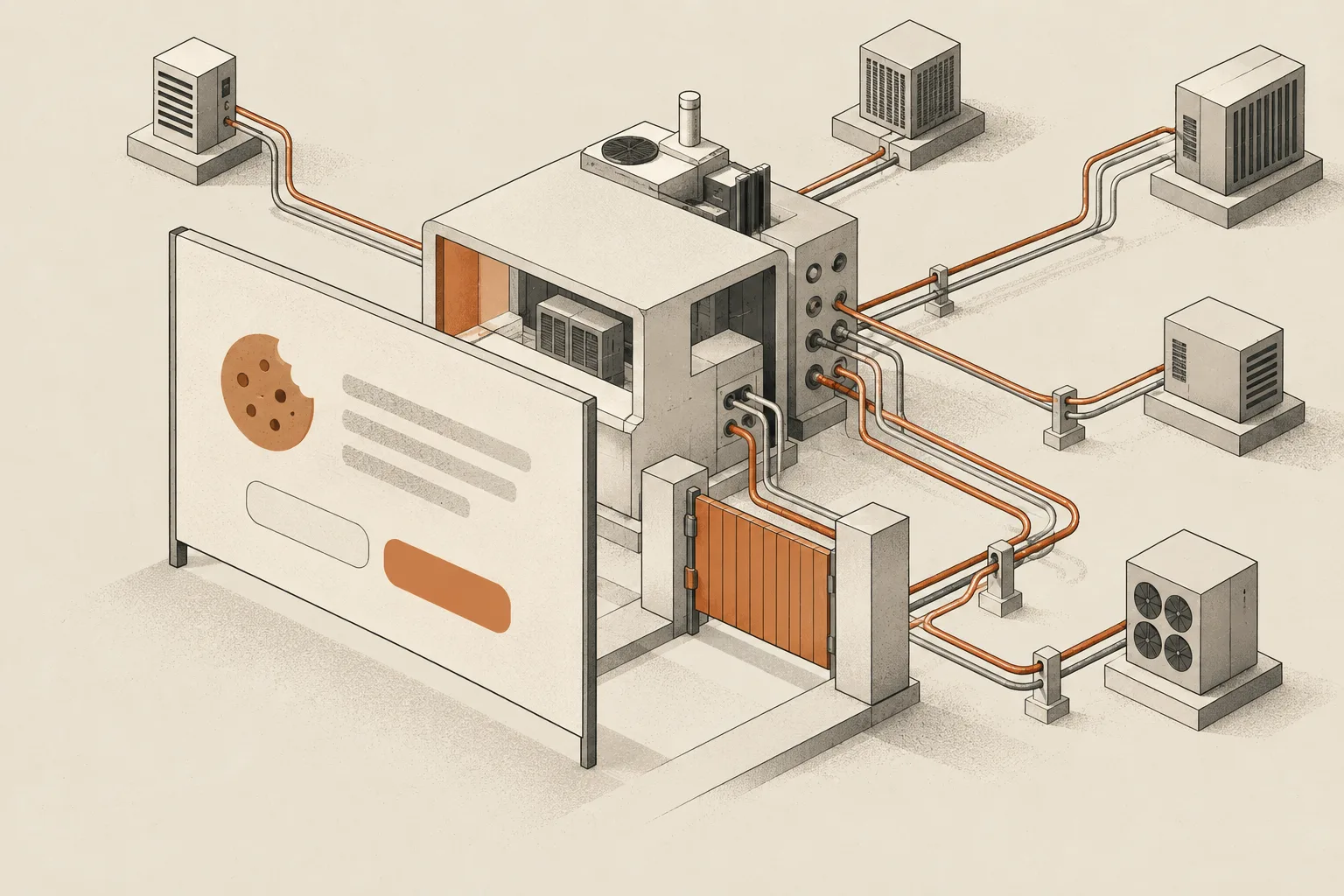
The result was predictable: the bot immediately returned a massive, generic text block copied verbatim from their FAQ. When I asked follow-up clarifying questions, it repeated the exact same wall of text. Trying to reach a human agent was impossible until the bot mistakenly flagged one of my messages as a loan inquiry. In less than a second, it routed me straight to a live human operator.
Executive Summary
- Most enterprise bank chatbots remain hardcoded decision trees from the mid-2010s, relying on basic keyword matching rather than true LLM comprehension.
- Legacy enterprise architecture, compliance bottlenecks, and data isolation prevent large banks from quickly adopting modern RAG pipelines.
- Modern AI assistants built for small businesses using tools like FastAPI, n8n, and Claude 3.5 Sonnet cost around $1,000 and deliver superior customer experience.
- Priority routing in banking bots is strictly aligned with revenue products, revealing that human support availability is a business decision rather than a technical limitation.
Why Enterprise Chatbots Fail on Basic Queries
Enterprise bank chatbots fail because they operate on rigid rule-based decision trees instead of semantic understanding.
When a customer asks a multi-part question or requests clarification, a legacy bot attempts to match isolated keywords to pre-written support documents. It does not parse user intent, maintain contextual memory across turns, or synthesize relevant information. If your query deviates slightly from the programmed script, the bot defaults to its top canned response.
Large corporations built these systems 5 to 10 years ago. Upgrading them requires navigating procurement committees, security audits, and complex integration with core banking mainframes. Consequently, while AI tooling has progressed exponentially, the customer experience in enterprise banking apps remains frozen in time.
The Economics: Enterprise Legacy vs Modern AI Stack
A modern conversational AI agent built for $1,000 can easily outperform legacy enterprise systems costing hundreds of thousands of dollars.
Small businesses and agile teams now deploy production-grade AI assistants in days using frameworks like FastAPI, PostgreSQL with pgvector, n8n, and hosted LLM endpoints (Claude 3.5 Sonnet, GPT-4o). For a complete pricing and scoping breakdown, see our guide on custom AI agent development costs in 2026. These setups use Retrieval-Augmented Generation (RAG) to query knowledge bases dynamically, maintain context, and escalate to humans seamlessly via Telegram, WhatsApp, or Slack.
| Metric / Dimension | Enterprise Bank Chatbot | Custom Modern AI Agent |
|---|---|---|
| Architecture | Hardcoded decision trees & keyword triggers | Semantic RAG + LLM Intent Routing |
| Development Cost | $100,000 - $500,000+ | $1,000 - $3,000 |
| Setup Timeline | 6 - 18 months | 3 - 7 business days |
| Context Retention | Single-turn keyword matching | Full conversational context & history |
| Escalation Path | Blocked behind rigid deflection filters | Smart automated routing & human handoff |
| Maintenance | Dedicated vendor contracts & manual scripts | Dynamic document sync & prompt tuning |
Legacy Enterprise Bot
High FrictionCompliance and Security: Real Concern or Convenient Excuse?
Data privacy and banking regulations are valid constraints, but modern security architectures allow full compliance without sacrificing user experience.
Enterprise teams frequently cite GDPR, SOC2, and customer data liability as reasons to avoid LLMs. However, digital-native neobanks like Revolut and Monzo have demonstrated that privacy-compliant AI assistants can operate safely at scale.
Modern architectures isolate sensitive personal identifiable information (PII) before queries reach the model:
- PII Masking Layer: Account numbers, phone numbers, and names are stripped locally before processing.
- Deterministic Tool Calling: Financial transactions are executed via strict API contracts with parameterized validation, never raw LLM generation.
- Scoped Knowledge Access: The AI only retrieves curated support documentation, ensuring factual accuracy without hallucinations.
Large banks suffer from institutional inertia rather than technical roadblocks. Their budgets are massive, but organizational layers prevent them from replacing legacy systems.
How to Build a Responsive AI Assistant for Your Business
Building a high-performing AI support assistant requires clean documentation, reliable vector search, and a clear escalation strategy.
For founders, local businesses, and digital agencies, deploying an effective conversational agent involves three straightforward steps:
- Structure Knowledge Bases: Convert FAQs, service catalogs, and onboarding guides into structured markdown files for vector indexing.
- Implement Guardrails and Smart Routing: Configure intent classification so standard support questions are answered instantly, while high-value sales inquiries or complex issues trigger immediate human alerts.
- Connect Production Channels: Integrate directly into your website chat, WhatsApp, or Telegram using webhook workflows.
Explore our 50+ practical AI agent use cases to see real-world deployments across 10 industries, request an AI architecture audit to diagnose operational bottlenecks, or explore our AI automation services to build your custom pipeline.
Frequently Asked Questions
Why do bank chatbots avoid connecting users to real human agents?
Banks design support bots primarily for ticket deflection to lower operational support costs. Human agents are typically reserved for revenue-generating opportunities (like loans and mortgages) or escalated disputes.
Can a $1,000 AI bot handle complex customer inquiries safely?
Yes. By using Retrieval-Augmented Generation (RAG) with strict system prompts, the bot only answers from verified business documentation and cannot invent unauthorized policies or pricing.
What happens if an AI assistant cannot answer a specific question?
A well-architected AI bot recognizes when confidence scores drop below a set threshold, politely acknowledges the limitation, and immediately forwards the full chat transcript to a human manager via CRM or messaging alerts.
ilf.studio - AI-native web studio, Gdansk, Poland.