Between 2022 and 2024, low-code platforms like Zapier, Make, and self-hosted n8n were celebrated as the ultimate automation revolution. For small experiments and simple 2-step triggers, they worked well.
However, by 2026, companies that scaled their operations on visual workflow builders have hit a severe engineering wall:
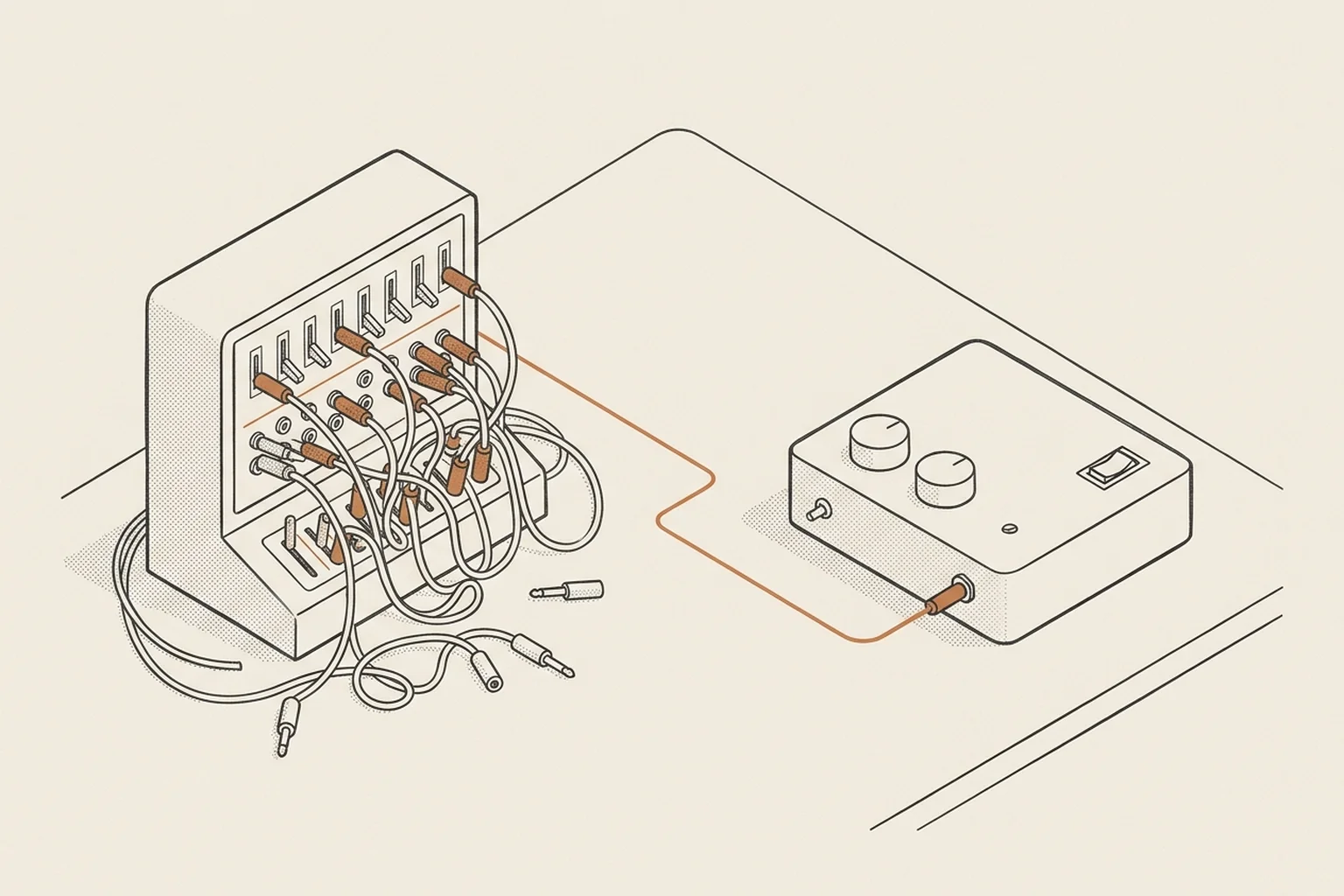
- Complex branching scenarios turn into unreadable “spaghetti graphs” that no one can debug when an execution fails at 2:00 AM.
- Git version control is practically impossible: inspecting a 4,000-line JSON blob diff during a pull request is a nightmare.
- A single schema change in an upstream API silently breaks 12 downstream nodes, dumping hundreds of leads into error logs.
- Memory consumption explodes: self-hosted n8n instances frequently consume 2 to 4 GB of RAM just maintaining idle execution queues.
With the rise of AI-native engineering tools, the fundamental premise of low-code has evaporated. Writing clean, typed, modular code microservices in Python or Node.js now takes the same amount of time as wiring up visual nodes, but delivers infinitely higher reliability, zero vendor lock-in, and 90% lower hosting overhead.
Executive Summary
- The Low-Code Illusion: why visual workflow builders create technical debt at scale.
- Production Pain Points: fragile error handling, opaque JSON diffs, and catastrophic failure cascades in visual nodes.
- The AI-Native Alternative: how modern teams engineer lightweight, typed microservices in hours using AI coding assistants.
- Architectural Comparison: self-hosted n8n container vs lightweight Fastify/Node daemon.
- Step-by-step roadmap for migrating mission-critical workflows from visual builders to maintainable code.
1. Why Visual Workflow Builders Break Under Pressure
Low-code platforms trade architectural rigor for visual accessibility. When your business grows past basic notifications, this compromise exacts a heavy toll:
- Brittle Data Schemas: In a visual builder, data passes between nodes as untyped JSON. If an external service changes a timestamp format from Unix epoch to ISO-8601, every subsequent node fails silently or corrupts the database.
- The “Canvas Spaghetti” Problem: A workflow that handles retry logic, rate limiting, and fallback notifications requires 25+ visual nodes. Reading and auditing that logic on a canvas is cognitively exhausting compared to 40 lines of structured TypeScript.
- No True Automated Testing: You cannot easily write unit tests, integration tests, or mock suites for visual nodes. Verification requires running live test payloads through the entire chain.
Visual Low-Code (n8n / Zapier)
Fragile CanvasUntyped JSON passed across 25+ visual nodes. Schema shifts trigger silent cascade drops.
- Opaque 5,000-line JSON git diffs
- Zero native unit or integration testing
- Consumes 1–2 GB RAM idling in Docker
AI-Native Code Microservice
Production GradeTyped inputs validated via Zod contracts. Built in hours with AI-assisted workflows.
- Clean, readable git commits & CI/CD
- 100% automated test coverage (Vitest)
- Runs on 45 MB RAM with 18ms latency
2. Benchmark: n8n vs Lightweight Node.js Microservice
We benchmarked a standard B2B lead intake pipeline (receiving a webhook, validating fields, qualifying via LLM, and sending an alert) implemented on n8n versus a dedicated Node.js service:
| Performance Factor | Self-Hosted n8n (Docker) | AI-Native Node.js Daemon | Difference |
|---|---|---|---|
| RAM Footprint (Idle) | 480 MB – 1.2 GB | 42 MB | 92% less memory |
| RAM Footprint (Under Load) | Up to 2.4 GB | 78 MB | Stable & minimal |
| Webhook Response Latency | 320ms – 650ms | 18ms – 35ms | 15x faster |
| Git Version Control | Opaque 5,000-line JSON | Clean, readable commits | True code review |
| Automated Testing | Manual sandbox triggers | Jest / Vitest CI/CD | 100% test coverage |
| Maintenance Overhead | High (Node upgrades break flows) | Virtually zero | Runs for years |
3. How AI-Native Development Changed the Math
Historically, businesses chose low-code because hiring a software engineer to build custom APIs took 3 weeks and cost $8,000.
Today, AI-native engineering changes the equation entirely:
- Using modern AI engineering environments, an experienced engineer can scaffold, type, test, and containerize a custom webhook handler in under 2 hours.
- The resulting service runs as a compiled binary or lightweight Docker container that costs nothing in recurring platform licenses.
- When an API changes, updating the code takes a single prompt, automated type-check, and automated git deploy.
Why accept the limitations and fragility of a visual canvas when you can have production-grade software engineered at low-code speed?
4. Migration Strategy: Moving from n8n to Code
If your company currently relies on visual automations, do not attempt to rewrite everything overnight. We recommend a 3-step phased migration:
- Audit & Isolate: Identify the 20% of workflows that handle 80% of your critical business volume (lead intake, payment webhooks, CRM sync).
- Extract Schema & Logic: Export the workflow logic into typed data contracts using validation libraries like Zod.
- Deploy as Standalone Microservices: Package each core pipeline into a tiny Docker container behind your existing reverse proxy.
Key Takeaways for Business Leaders
- Low-code is a prototyping tool, not a permanent architecture: As operations scale, visual nodes become fragile liabilities.
- AI-native engineering delivers the best of both worlds: The development speed of low-code combined with the robustness, speed, and precision of pure software engineering.
- Own your code, own your business: Moving away from third-party automation platforms cuts cloud costs and gives you complete control over your technical destiny.